Why this book · 01
Kids are not small adults.
Their motor, cognitive, and reading skills change from one year to the next. What works for a seven-year-old can fail completely for a four-year-old.
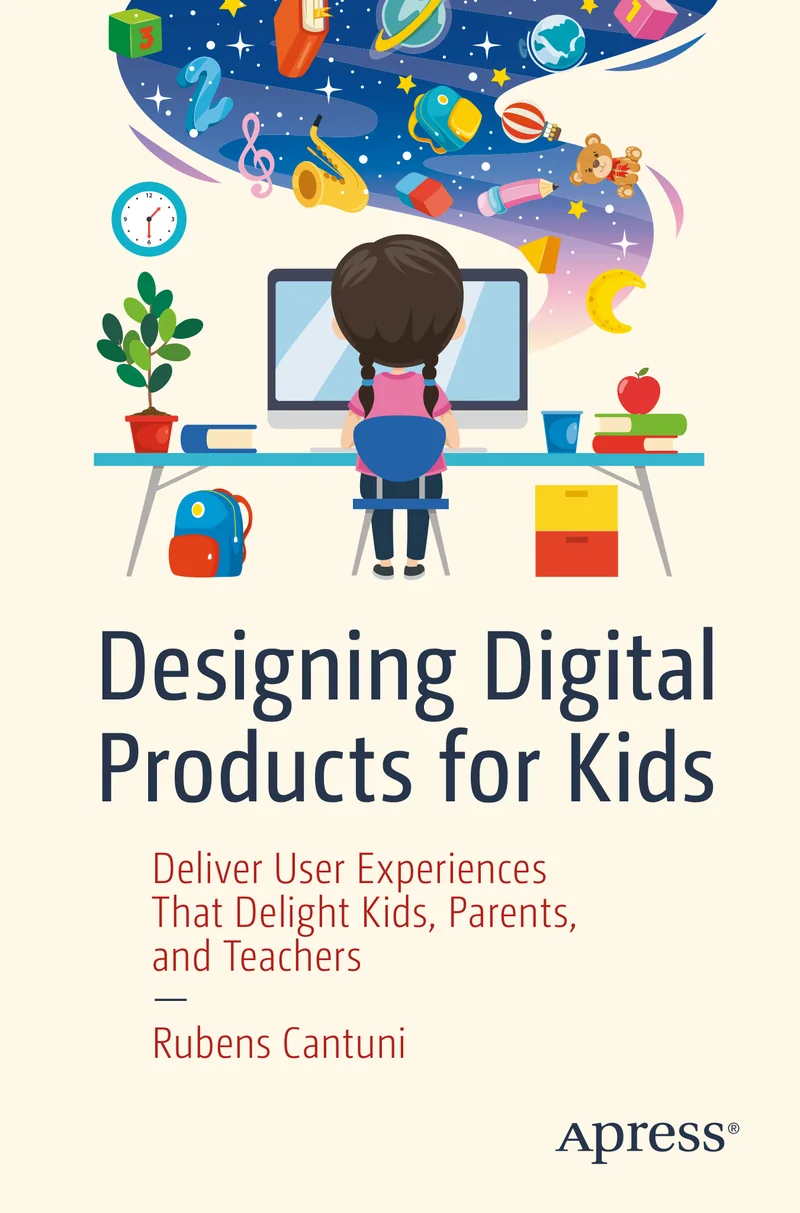
A book by Rubens Cantuni · Apress
Deliver user experiences that delight kids, parents, and teachers.
A complete, research-backed guide to designing beautiful, usable, and ethical digital products for children, from first concept to user testing and launch.
271 pages · Paperback and eBook · 2020
Why this book · 01
Their motor, cognitive, and reading skills change from one year to the next. What works for a seven-year-old can fail completely for a four-year-old.
Why this book · 02
Kids use it, parents pay for it, teachers recommend it. The book shows how to design for all three without diluting the experience.
Why this book · 03
Safety, privacy, conscious screen time, and accessibility shape every decision, from the first concept to the business model.
Inside the book
Ch. 01 to 12
Twelve chapters covering research, concept, gamification, safety, interaction and UI design, testing, and marketing.
Ch. 01–03 · Foundations
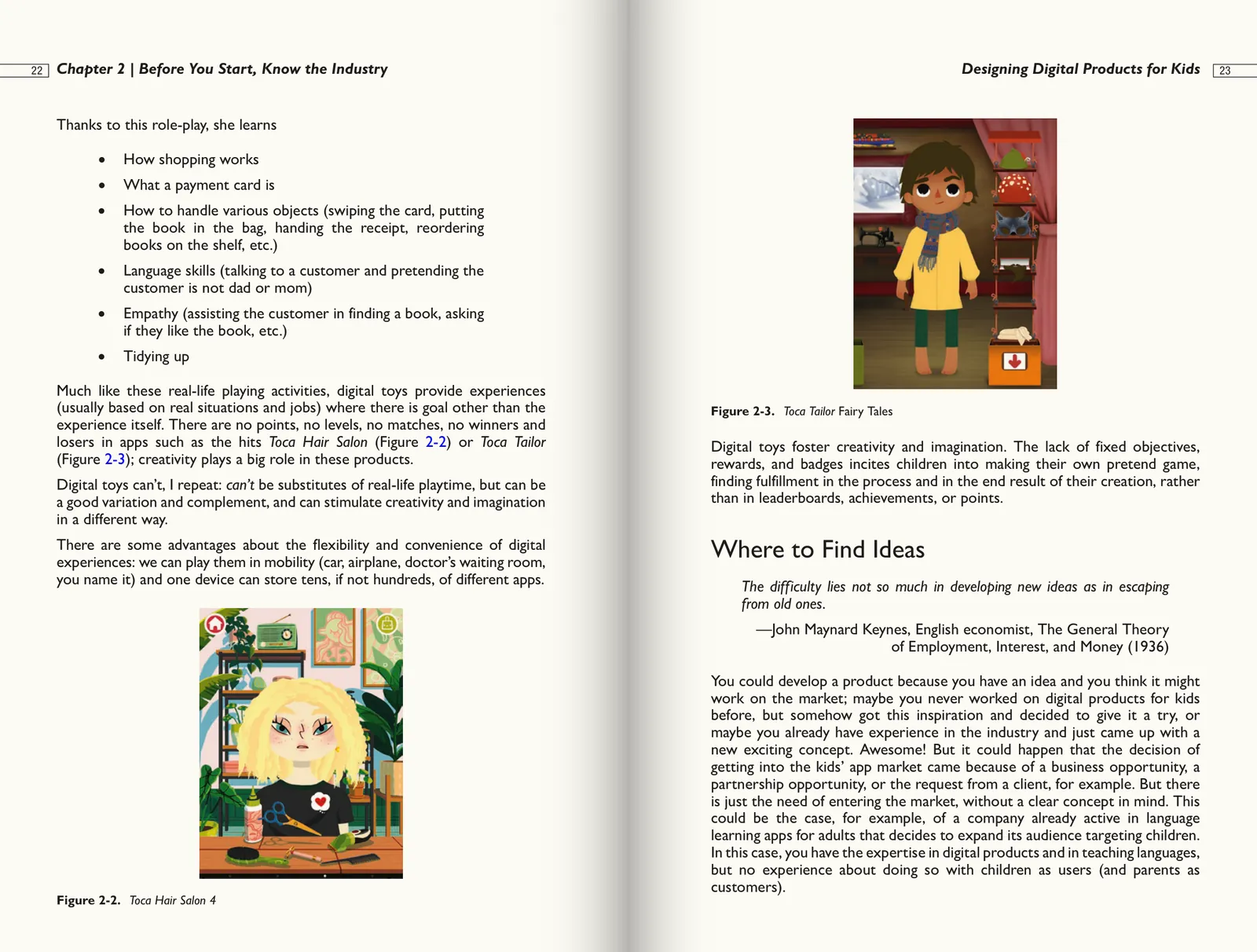
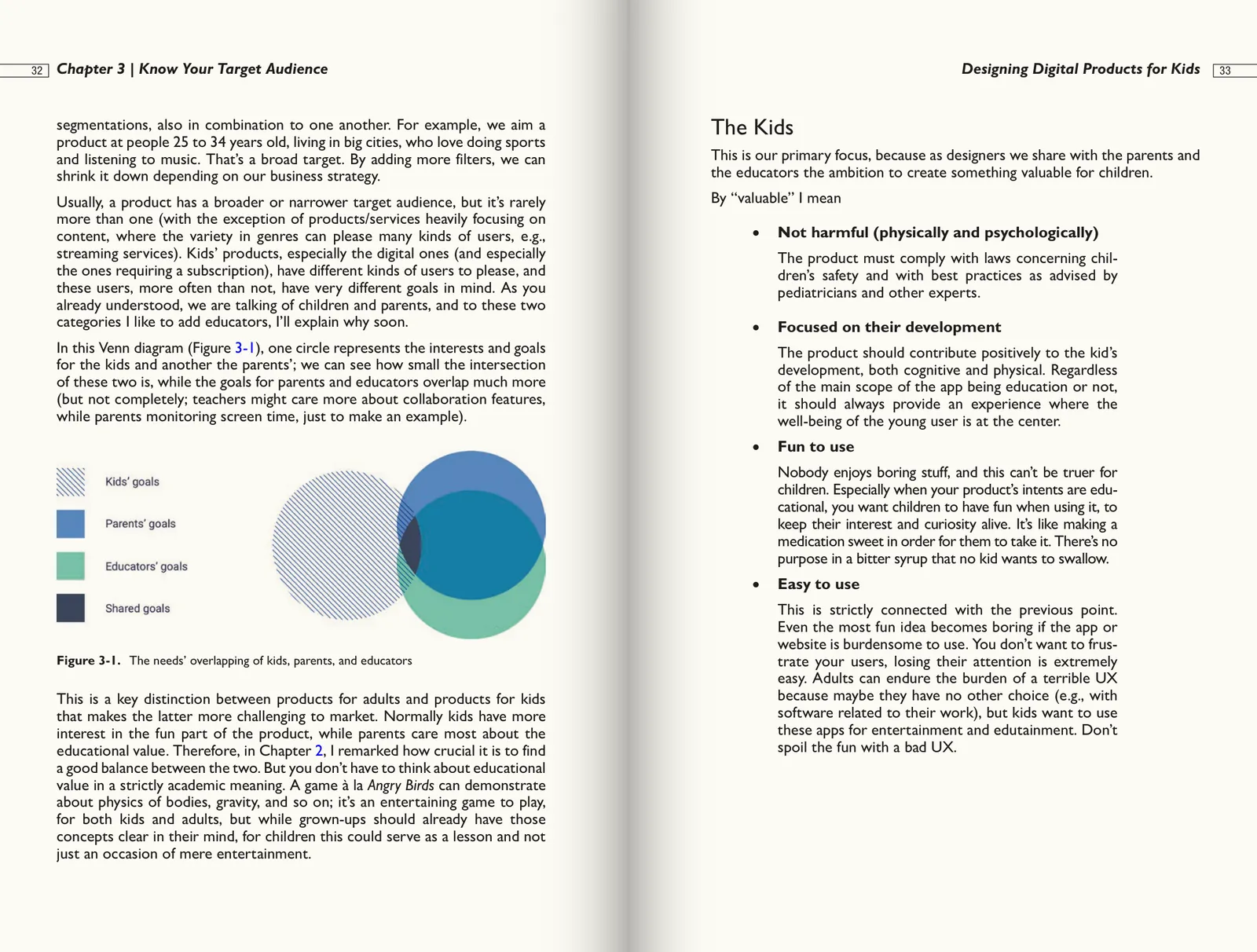
Why the kids’ market is worth designing for, how the industry works, from edutainment to digital toys, and how to design for kids, parents, and teachers at the same time.
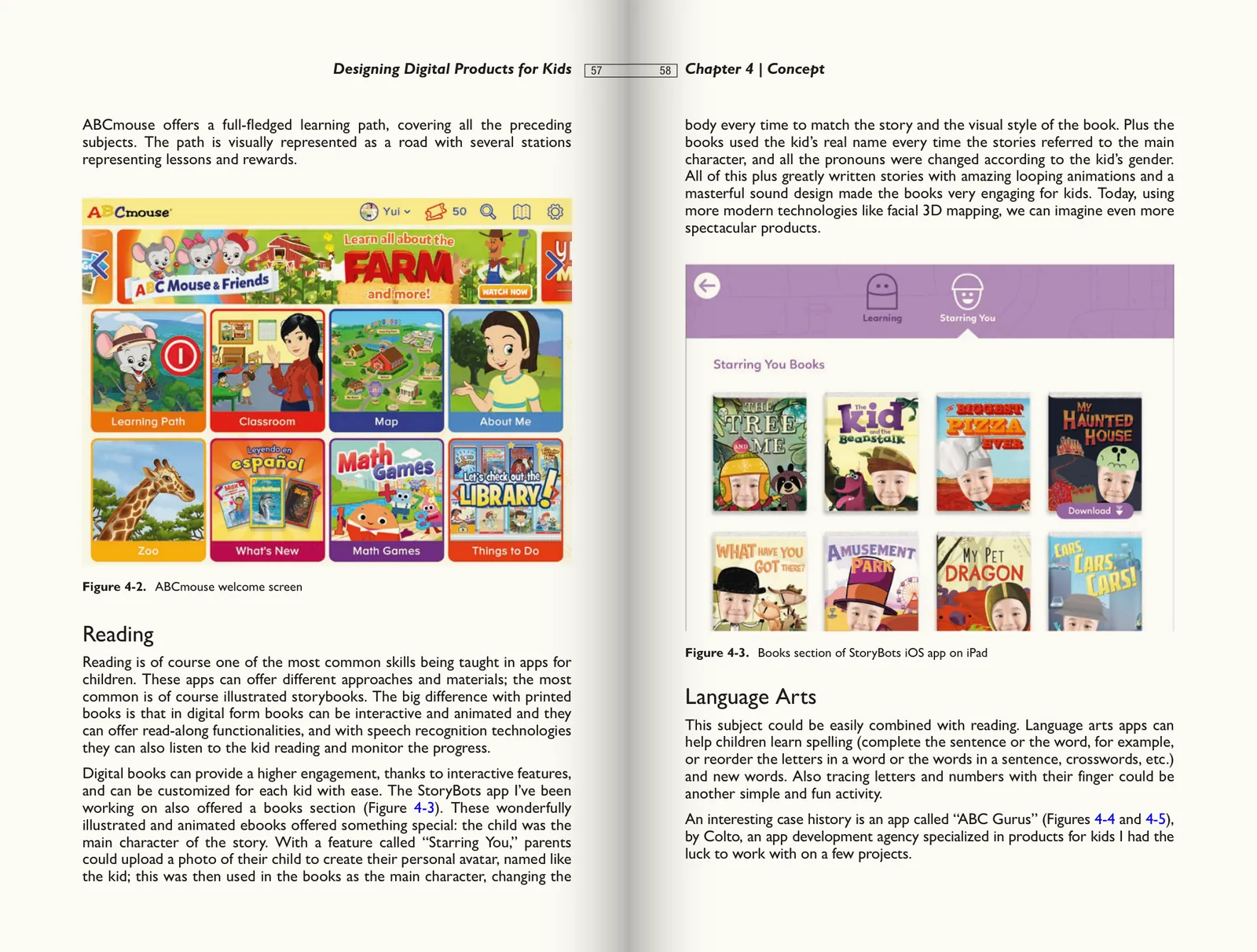
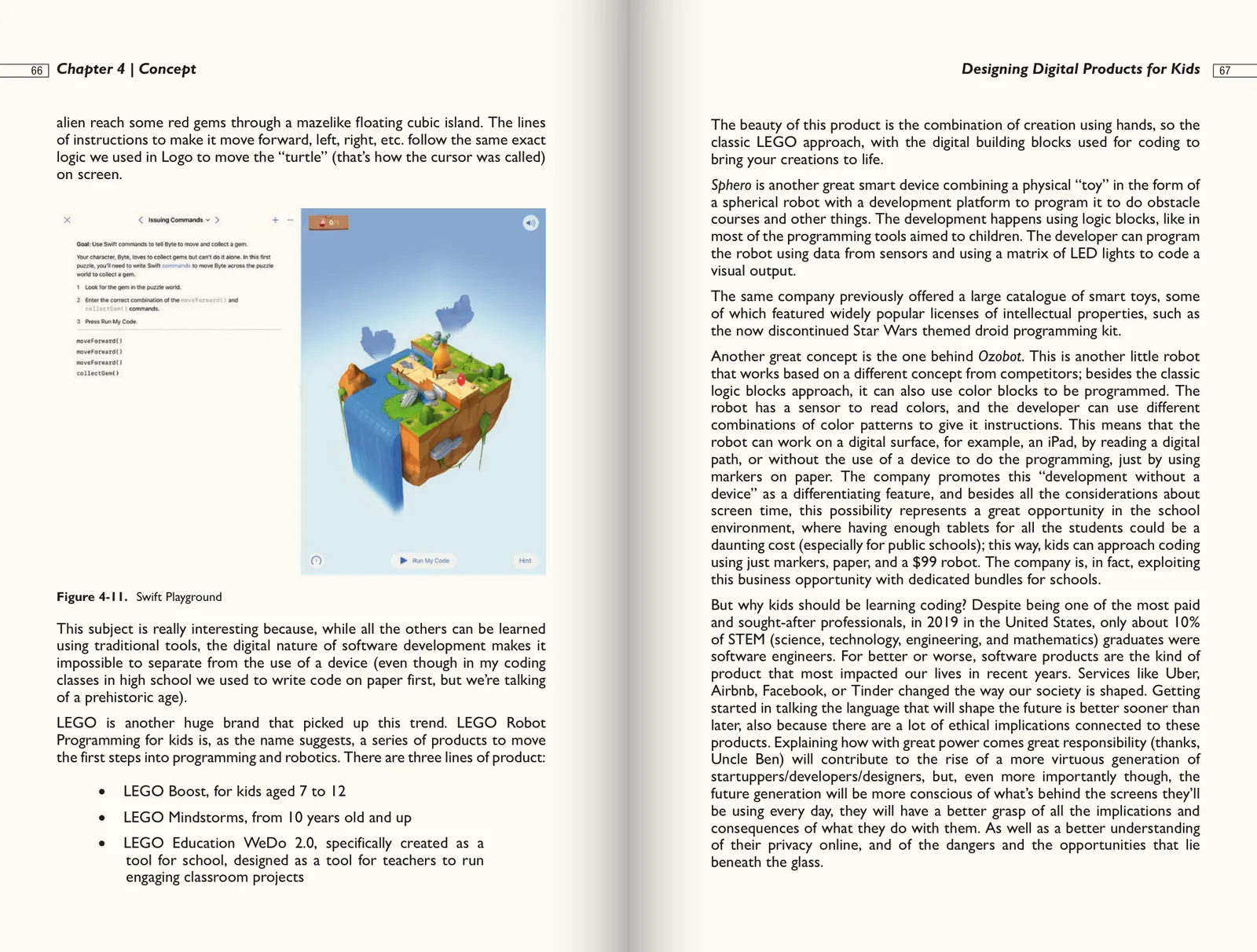
Ch. 04–05 · Concept and play
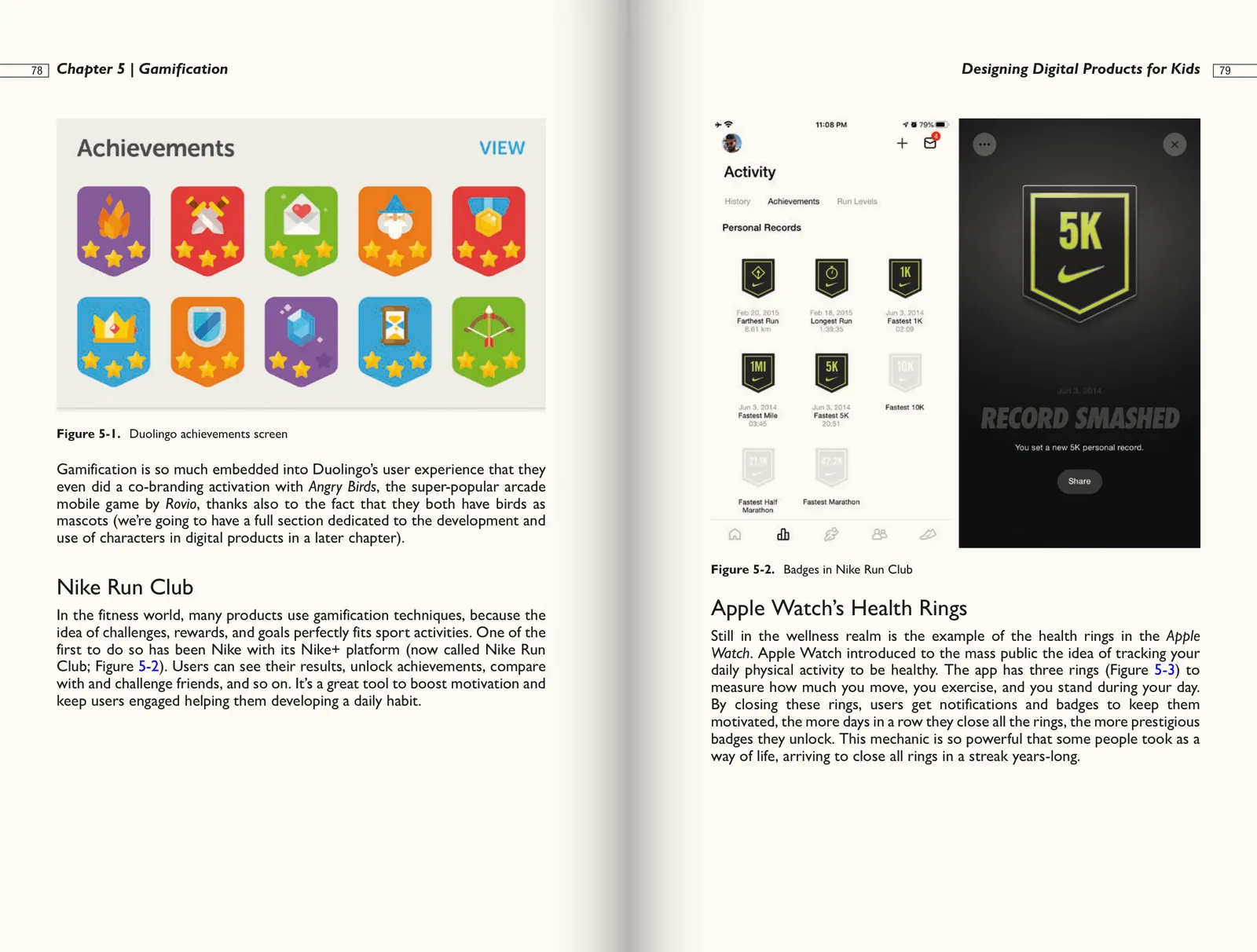
Choosing technologies, thinking like a kid, active vs. passive learning, and gamification built into the experience from day one.
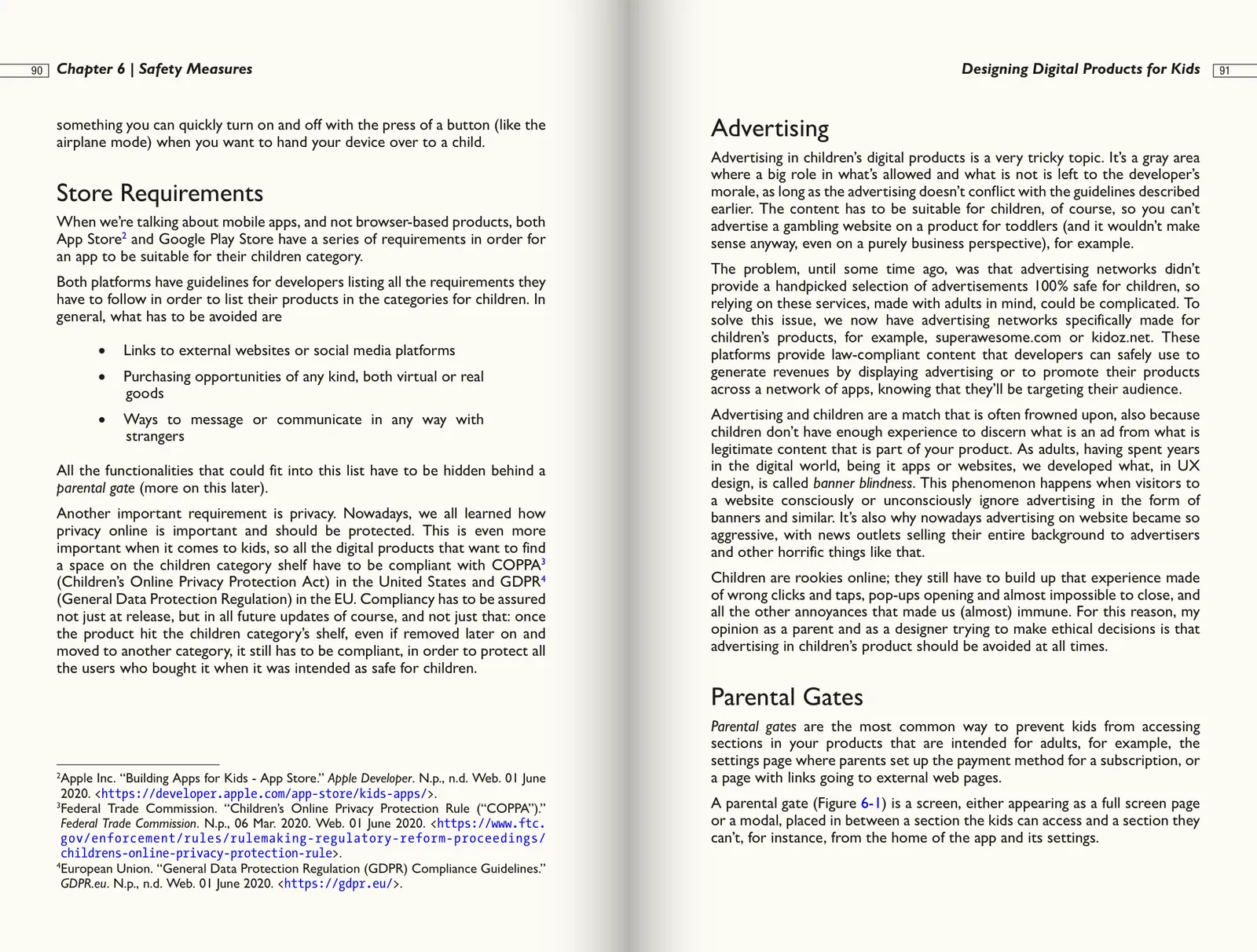
Ch. 06 · Safety
Store requirements, advertising, parental gates, and social features: the rules that protect children and the trust of their parents.
Ch. 07–08 · Interaction and UI
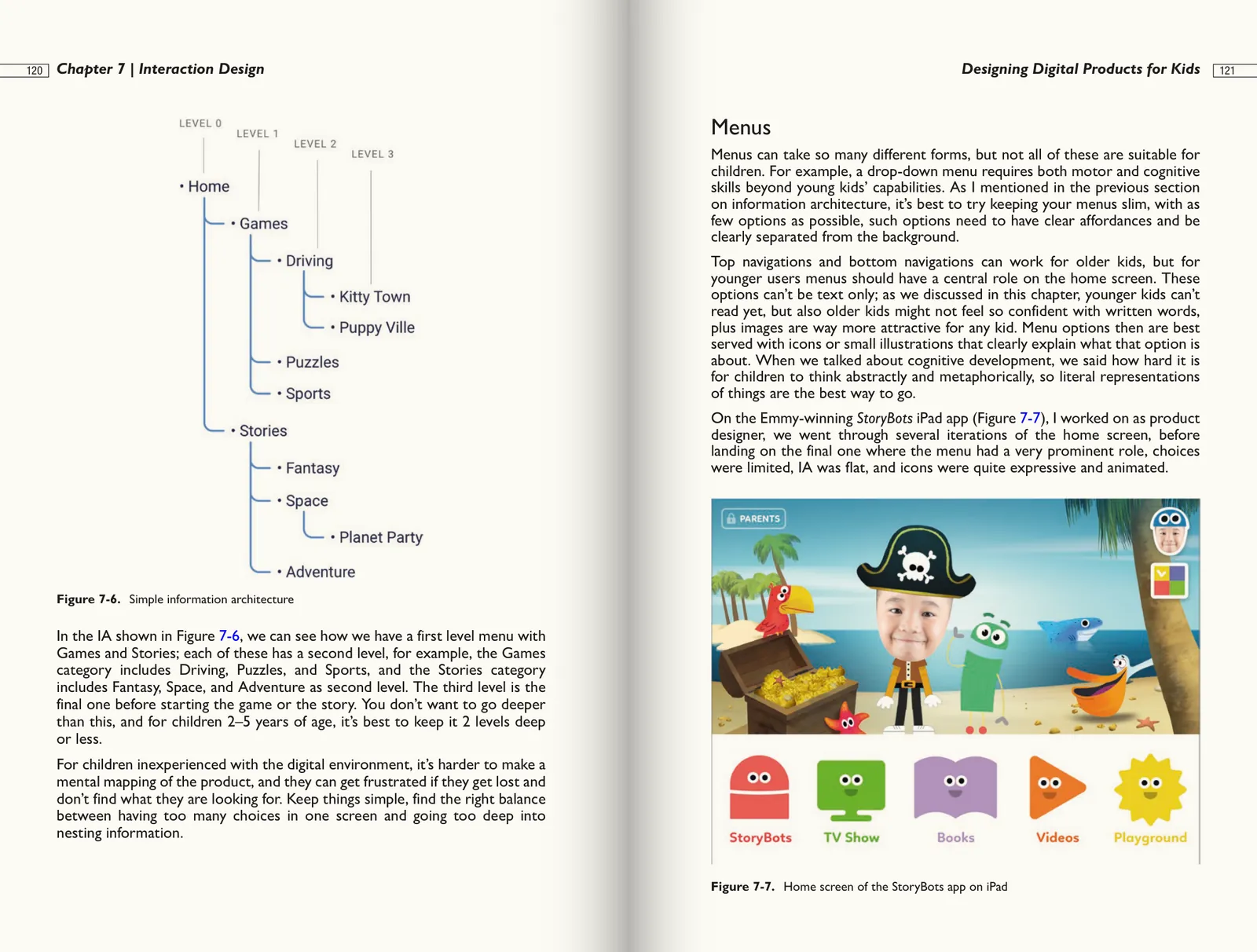
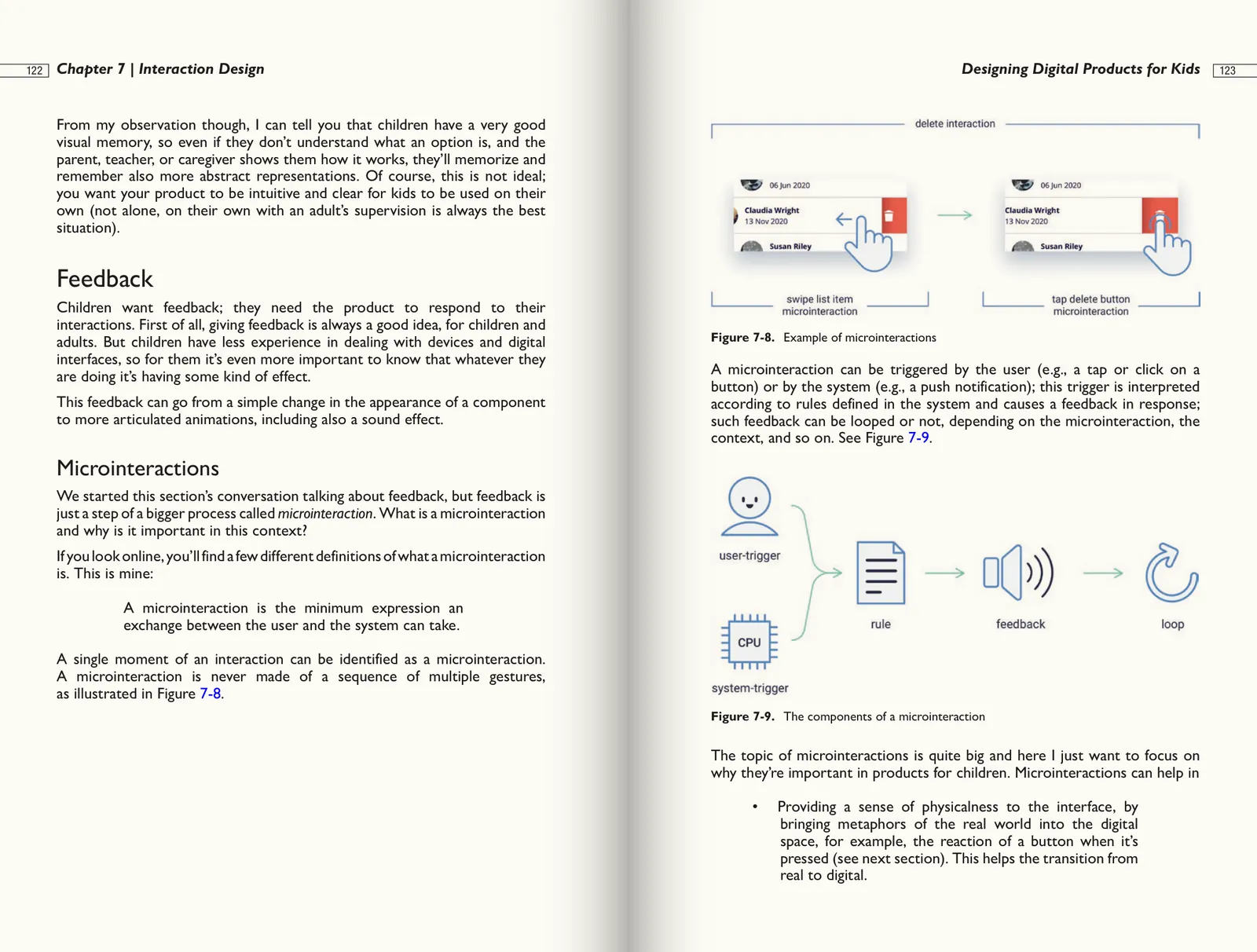
Age-appropriate interactions, navigation for kids who can’t read yet, feedback, color, typography, icons, and characters that guide.
Ch. 09–12 · Testing, launch, and beyond
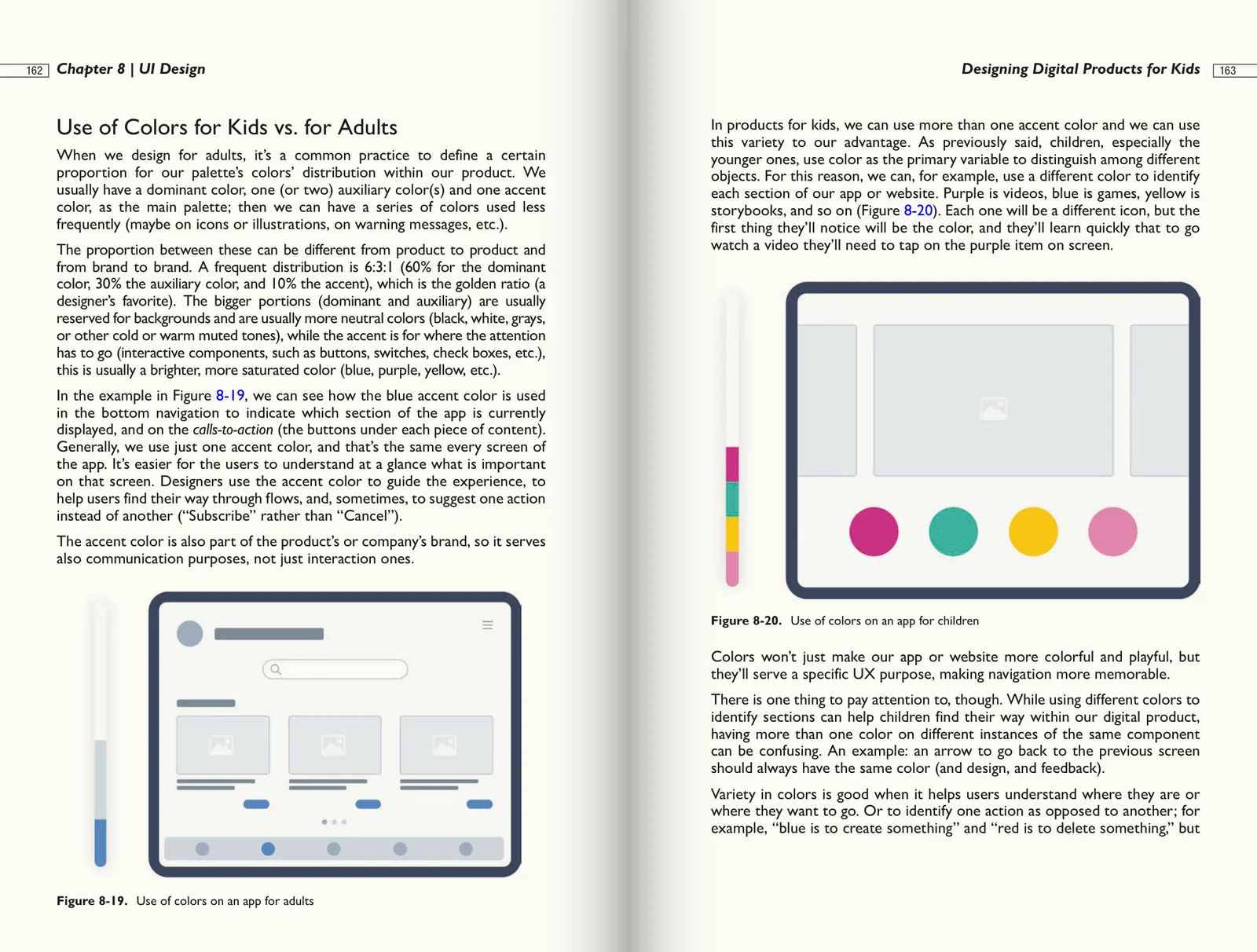
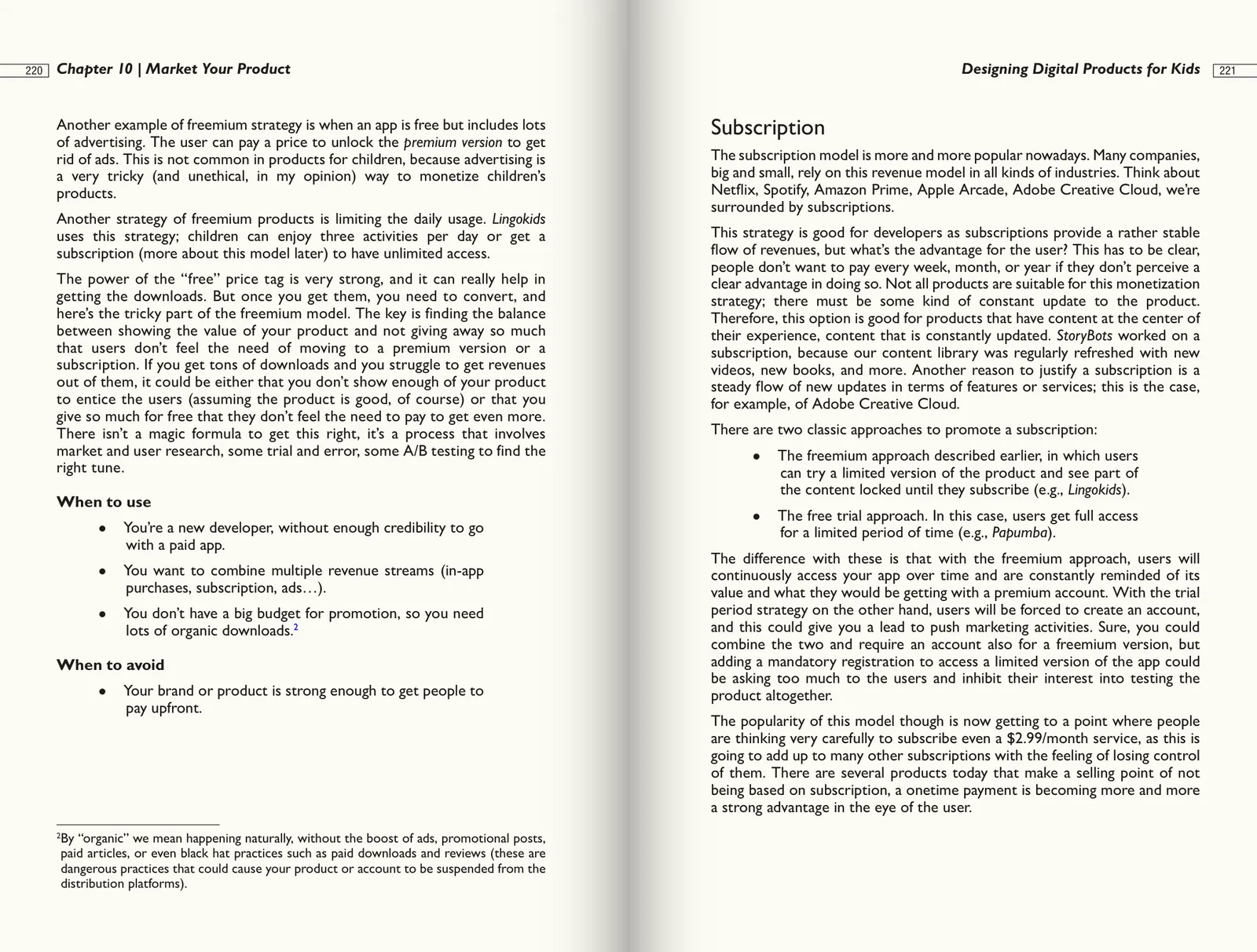
Recruiting and testing with children, business models, certifications, teachers as ambassadors, and where screens meet physical toys and augmented reality.
The business, educational, and design opportunities of the kids’ market.
Entertainment vs. edutainment, types of app experiences, and why digital toys aren’t video games.
Designing for kids, parents, and teachers at the same time.
Choosing technologies, thinking like a kid, what to teach, and passive vs. active learning.
Motivation, components, and best practices, built into the experience from day one.
Store requirements, advertising, parental gates, and social features.
Cognitive development, age-appropriate interactions, navigation for non-readers, feedback, and ethical screen time.
Color, icons, typography, buttons, character design, and age-appropriate styling.
Recruiting, environments, prototypes, and asking questions children can answer.
Business models, certifications, teachers as ambassadors, and finding users.
Augmented reality and the meeting of physical and digital toys.
Final considerations on designing for children.
Who it’s for
Hundreds of practical guidelines for interaction and UI design, from touch targets to typography.
How to recruit, run, and interpret user tests with children.
Market context, business models, and the trade-offs behind kids’ products.
Where the opportunities are, and what it takes to earn the trust of parents and teachers.
How learning goals become digital experiences, and how teachers drive adoption.
Platform choices, store requirements, and safety rules to plan for early.
Industry insight
Interviews from Toca Boca, StoryBots, PBS Kids, Colto, GoNoodle, and Kinzoo, placed alongside the chapters they speak to.
Björn Jeffery
Cofounder, Toca Boca
Ch. 01
Gregg Spiridellis
Cofounder, StoryBots
Ch. 02
Scott Emmons
Writer, Ask the StoryBots
Ch. 03
Dr. Nina Neulight
Educator and learning designer
Ch. 04
Sean Herman
Founder and CEO, Kinzoo
Ch. 07
Chris Bishop
Former creative director, PBS Kids
Ch. 08
Chris O’Hara
Animator and character designer
Ch. 08
Martina Dell’Acqua
Head of Product, Colto
Ch. 09
Catriona Wallis
Founder and CEO, Colto
Ch. 10
Raffi Frensley
Marketing Director, GoNoodle
Ch. 10
Get the book
THE book for learning experience designers creating digital products
“This is a no-nonsense helpful book for designers of children’s digital products, I highly recommend it to the LXD community.”